Plug-in Hybrid vs Hybrid Cars in India: Key Differences
 By Admin
Reading time: 8 min read
Published on: 19 / 11 / 2026


Plug-in Hybrid vs Hybrid Cars in India: Which Is Better for You?
You love driving, but frequent petrol stops can take some fun out of owning a car. Strong hybrids and plug-in hybrids offer two ways to use less fuel. The right choice depends on how you drive and whether you have somewhere to charge.
Hybrid cars combine a petrol engine with an electric motor to improve fuel efficiency. However, strong hybrids and plug-in hybrids use different battery systems and charging techniques. A powerful hybrid car (HEV) automatically charges its battery while driving, eliminating the need for an external charger. A plug-in hybrid (PHEV) has a larger battery that can be charged by an external power source, allowing it to go longer on electricity alone.
So, which one should you choose? It all depends on your daily driving distance, recharge options, and budget. Let's see how both systems perform and which is more suited to Indian driving conditions.
What Is a Hybrid Car?
A hybrid car is a powerful combination of a battery, an electric motor, and a petrol engine. Both power sources work together to move the car and improve fuel efficiency. In contrast to mild hybrids, which primarily provide support to the petrol engine, robust hybrids can also operate the wheels solely on electric power under appropriate circumstances.
What Is a Plug-in Hybrid Car?
A plug-in hybrid electric car (PHEV) is also fitted with a battery, electric motor, and petrol engine. However, its battery is significantly larger than that of a conventional strong hybrid and is capable of external charging.
A home charger or charging station that is compatible with PHEVs can be employed to power them. Depending on the model, its larger battery enables it to travel longer distances solely on electricity.
Plug-in Hybrid vs Hybrid Cars: Key Differences
Both systems reduce reliance on the engine in suitable conditions. The difference is how much electric driving they support and what you must do to achieve it.
|
Comparison factor |
Strong hybrid (HEV) |
Plug-in hybrid (PHEV) |
|
External charging |
Not supported |
Supported |
|
Battery size |
Generally smaller |
Generally larger |
|
Electric-only Driving |
Limited distance, depending on conditions |
Longer distance, depending on the model |
|
Daily routine |
Refuel and drive |
Refuel and charge regularly |
|
Running costs |
Mainly depend on petrol consumption |
Depend on petrol and electricity |
|
Buying consideration |
Fuel efficiency without charging requirements |
Electric range and charging convenience |
|
Low battery charge |
Managed automatically |
Engine-supported operation continues |
Fuel Efficiency and Running Costs: Which Is Cheaper?
Compare the journeys you actually make. A showroom mileage figure cannot account for your parking arrangement, electricity bill or enthusiastic right foot.
Strong Hybrid Running Costs
Strong hybrids mostly run on petrol, but they also use electricity to help them consume less fuel. They are especially helpful in urban traffic since the system can recover energy from repeated braking and acceleration. The fact that you may take advantage of hybrid technology without requiring a charging station is a good feature.
Plug-in Hybrid Running Costs
Plug-in hybrids can have reduced energy expenses because electricity is often cheaper per kilometre than petrol under certain situations.
For example, consider electricity costing ₹8 per unit and consumption of 0.20 kWh per kilometre. The electric running cost would be approximately ₹1.60 per kilometre. However, if you rarely charge the car, it will depend more on petrol, reducing the potential savings. For comparison, a strong hybrid delivering 20 km/litre at a petrol price of ₹100 per litre would cost approximately ₹5 per kilometre.
These are examples of calculations, not model claims or current tariffs. Compare cars of similar sizes and account for charging losses. Consider purchasing, insurance, servicing, and depreciation costs before crowning a winner.
Plug-in Hybrid vs Hybrid Cars: Which Is Better for Indian Driving Conditions?
The right choice depends on where you drive and whether you have access to charging facilities.
For City Driving Without Charging Facilities
A robust hybrid is frequently more convenient for apartment dwellers and those without dedicated charging stations. It provides electric assistance and improves fuel efficiency without interfering with your daily activities.
The Lexus ES 350h is one option worth considering.
For Daily Commuting With Home Charging
A plug-in hybrid is more practical if you have a dedicated charging station at home or at work. You can charge it on a regular basis and use electricity for shorter daily commutes.
Before purchasing, evaluate the electric range, charging time, installation requirements, and compatibility with available charging stations.
For Frequent Highway Driving
If you frequently travel long distances, compare fuel efficiency once the battery's usable electric range has been depleted.
A strong hybrid provides the ease of traditional refuelling, whereas a plug-in hybrid provides electric power for shorter trips with petrol backup for longer trips.
Also consider luggage space, comfort, service availability and maintenance costs.
Price: Plug-in Hybrid vs Hybrid Cars
Price is another important factor when comparing these two technologies.
Strong hybrid cars are available in a wide range of categories in India, including SUVs, sedans, and MPVs. SUVs, sedans, and MPVs are a few of the strong hybrid vehicles that are offered in India. Due to the added electric motor and battery, their prices are typically greater than those of similar petrol-only vehicles.
Larger batteries and more advanced charging techniques are common features of plug-in hybrids. Their buying prices can be significantly higher, especially in the premium and luxury categories.
Before purchasing either type, compare the cost to a typical petrol-powered vehicle and figure out how much you could save on fuel or energy over the course of your anticipated ownership time.
Do not assume that a more expensive car is a better financial choice simply because it has a lower running cost.
Hybrid vs Plug-in Hybrid Cars in India: Which Models Should You Consider?
Begin with the exact powertrain and ownership purpose. These premium examples address different priorities.
Lexus NX 350h: Premium Strong-Hybrid Driving
The Lexus NX 350h is a premium Lexus SUV that combines a 2.5-litre petrol engine with electric motors. Its strong-hybrid system automatically manages petrol and electric power according to driving conditions. The battery recharges through regenerative braking and the engine, so there is no requirement for external charging. It is worth considering for buyers looking for a premium SUV with hybrid technology and the convenience of conventional refuelling. For a used model, check its service history, battery condition, warranty coverage and overall maintenance records before purchasing.
BMW M5: Jet-Setting Plug-In
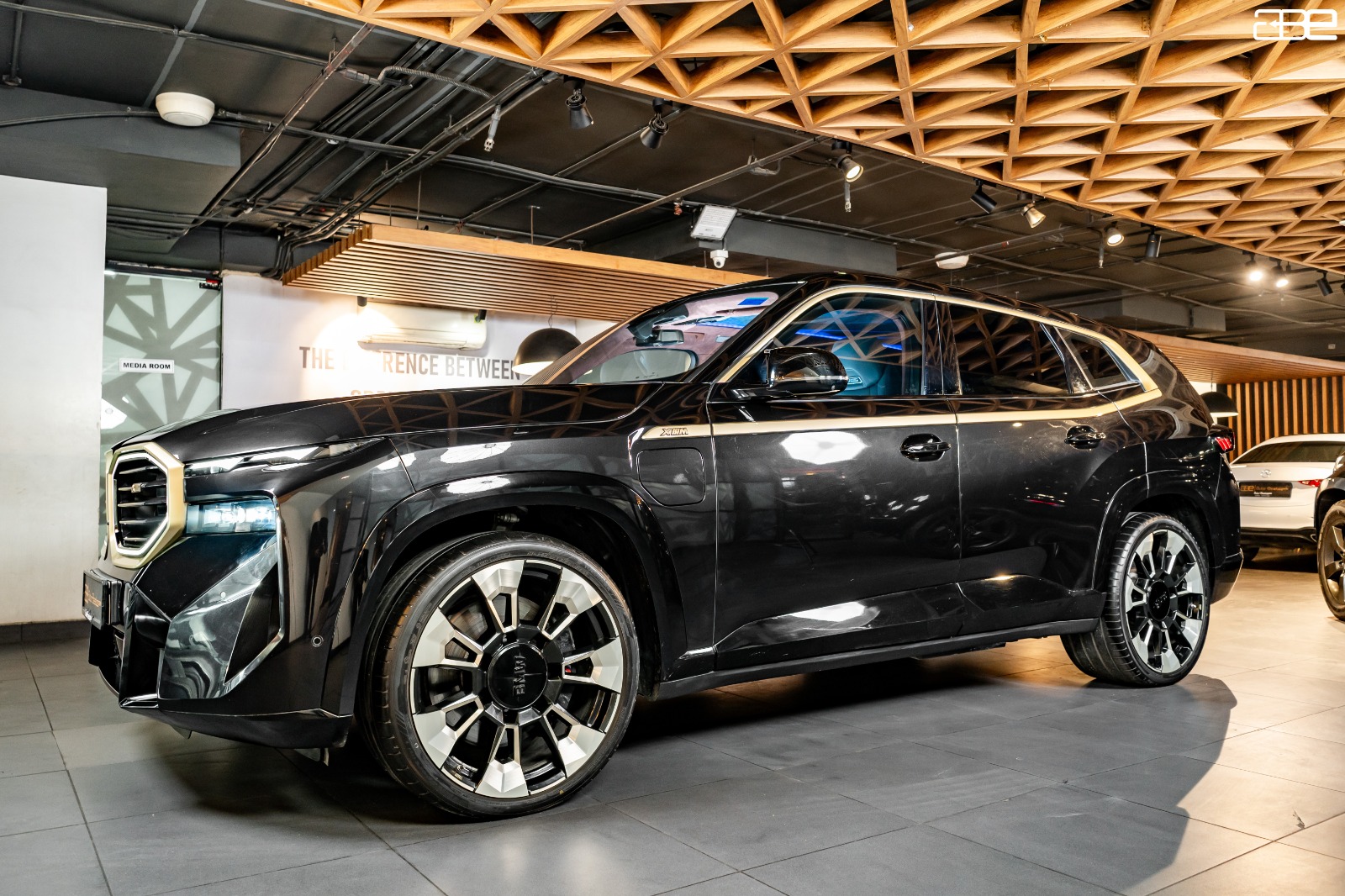
The BMW M5 combines a 4.4-litre V8 petrol engine with an electric motor as part of its plug-in hybrid powertrain. Unlike a conventional strong hybrid, its battery supports external charging and allows the car to cover a certain distance using electric power alone. The M5 is designed primarily for buyers who want high performance along with the flexibility of electric driving.
If you are following upcoming plug in hybrid cars in India, wait for confirmed Indian specifications, prices and delivery schedules. An overseas reveal does not establish local availability. Our guide toHybrid Cars offers further reading.
Conclusion
In India, the choice between plug-in hybrid and strong hybrid cars is based on charging convenience and driving patterns.
A strong hybrid is a viable option if you want to improve fuel efficiency without relying on charging stations. If you can charge your car on a regular basis and wish to use electricity for daily trips, a plug-in hybrid is worth considering.
Before making a decision, consider the purchase price, electric range, fuel efficiency, and required maintenance.
Explore AutoBest's Second hand luxury cars inventory: identify the specific variant, and request a test drive. Once the showroom fever has passed, choose the car that suits your life.
Frequently Asked Questions
What is the main difference between a plug-in hybrid and a hybrid car?
A strong hybrid is charged by the engine running and regenerative braking. A plug-in hybrid can also get power from an external source and typically provides a longer electric-only range before using the engine more.
Which Is Better: A Plug-in Hybrid or a Strong Hybrid?
A strong hybrid is better suited to people without convenient charging facilities. A plug-in hybrid is more suitable for people who can charge regularly and have predictable daily commutes.
Do plug-in hybrid cars need petrol?
Yes. They need fuel for greater distances and other operating conditions. They can use electricity alone when sufficient battery charge is available and driving conditions allow it.
Are plug-in hybrid cars cheaper to run than strong hybrids?
They can be less expensive to run when charged on a regular basis because electricity costs less per kilometre than petrol. However, savings are dependent on charging frequency, electricity rates, and car efficiency.
Can a strong hybrid car run on electricity alone?
Yes. A strong hybrid can drive using only its electric motor under suitable conditions. However, its electric-only driving capability is generally more limited than that of a plug-in hybrid.